
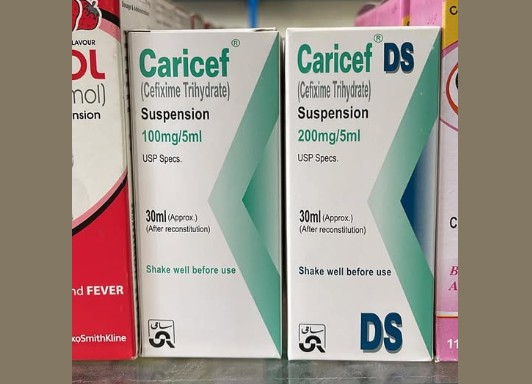
What is Caricef Syrup?
Caricef Syrup is a prescription antibiotic suspension whose active ingredient is Cefixime, a third-generation cephalosporin antibiotic. It is most commonly prescribed for children but is also used in adults when a liquid formulation is preferred.
Some formulations available in the market include:
- Caricef 100 mg/5 ml Suspension 60 ml
- Caricef DS 200 mg/5 ml Suspension 30 ml
Related combination brands like Carecef O and Carecef LB contain cefixime with ofloxacin or lactobacillus, but pure Caricef Syrup contains only cefixime.
Drug Class: Cephalosporin antibiotics
Therapeutic Class: Anti-infectives
Habit Forming: No
How Caricef Works: Mechanism of Action
Cefixime works by binding to penicillin-binding proteins in the bacterial cell wall, inhibiting the final step of peptidoglycan synthesis. This disrupts cell wall construction, causing the bacteria to weaken, rupture, and die.
It is effective against a broad spectrum of gram-positive and gram-negative bacteria, making it useful for many community-acquired infections.
Uses of Caricef Syrup
Caricef is prescribed for bacterial infections only. It does not work for viral infections like the common cold or flu.
Approved and common uses include:
|
System |
Specific Infections |
|---|---|
|
Respiratory Tract |
Pharyngitis, tonsillitis, bronchitis, pneumonia, sinusitis |
|
Ear, Nose, Throat |
Otitis media/middle ear infections, throat infections |
|
Urinary Tract |
Uncomplicated UTIs, cystitis in females |
|
Gastrointestinal |
Typhoid fever not requiring hospitalisation, intra-abdominal infections |
|
Skin & Soft Tissue |
Bacterial skin infections |
|
Sexually Transmitted |
Uncomplicated gonorrhoea |
|
Other |
Pelvic inflammatory disease, endometriosis |
Important note: Doctors prescribe antibiotics for cough/cold only when a secondary bacterial infection is confirmed.
Benefits of Caricef Syrup
- Broad-spectrum coverage: Treats many common pediatric bacterial infections with one drug.
- Child-friendly formulation: Liquid suspension is easier for children to swallow vs. tablets.
- Once-daily dosing possible: Improves compliance, especially in children.
- Effective for resistant infections: Combination versions like Carsef CL are used when bacteria have developed resistance.
- Gut flora support: Some cefixime brands add Lactobacillus to restore good bacteria and reduce antibiotic-associated diarrhea.
Dosage Guidelines
Always follow your doctor’s prescription. The doses below are general reference only.
Standard Dosing
- Adults: 400 mg once daily or divided into two 200 mg doses.
- Children: 8 mg per kg of body weight per day, or 8-20 mg/kg/day depending on age, weight, and severity.
Administration Tips
- Reconstitution: For dry syrup, add boiled & cooled water in two portions and shake well until suspended.
- Measuring: Use the provided measuring cup or oral syringe for accuracy.
- With/without food: Can be taken either way, but give with food if stomach upset occurs.
- Timing: Give at a fixed time daily for best results. Maintain consistent timing.
- Complete the course: Finish all prescribed doses even if symptoms improve early to prevent recurrence and resistance.
Missed Dose
Take as soon as you remember. If it’s almost time for the next dose, skip the missed one. Do not double dose.
Vomiting After Dose
If your child vomits within 30 minutes, repeat the same dose. If it’s close to the next dose, don’t double.
Side Effects
Most side effects are mild and temporary.
Common side effects:
- Diarrhea
- Nausea & vomiting
- Stomach pain or discomfort
- Headache
- Mild skin rash or itching
- Dizziness
Less common but serious side effects:
- Allergic reactions: Hives, swelling of face/throat/tongue, difficulty breathing, severe rash. Stop drug and seek help immediately.
- Severe diarrhea with blood/mucus: May indicate C. difficile infection. Stop medicine and contact doctor.
- Bleeding risk: Increased when taken with blood thinners like warfarin.
- Seizures: Rarely reported.
- Encephalopathy & EEG changes: With overdose.
Children usually start improving within 3-5 days, but continue the full course.
Precautions & Warnings
- Allergies: Avoid if allergic to cefixime, penicillins, or other cephalosporins.
- Medical history: Tell your doctor about kidney issues, gastrointestinal disease, or past antibiotic-associated colitis. Dose adjustment needed in moderate/severe renal impairment.
- Pregnancy & breastfeeding: Use only if prescribed.
- Medical history disclosure: Share past allergies, heart/blood disorders, birth defects, lung/kidney/liver issues with your doctor for safe dosing.
- Drug interactions:
- Warfarin: Increases bleeding risk.
- Antacids with aluminum/magnesium: Can reduce absorption. Take 2 hours before/after.
- Probiotics: May help reduce diarrhea risk.
Storage Instructions
- Store below 25°C in a cool, dry place.
- After reconstitution, refrigerate and use within the period specified on the label.
- Keep out of reach of children.
- Check expiry date: e.g., some batches expire July 2026.
Price in Pakistan & Other Regions
Prices vary by brand, strength, and pharmacy.
Pakistan:
- Caricef Syrup 100 mg/5 ml 60 ml: Rs. 389.68
- Caricef DS 200 mg/5 ml 30 ml: Rs. 346.5 after 10% discount, MRP Rs. 385
- General range: Rs. 200 – Rs. 300 depending on brand/pharmacy
India (for similar cefixime brands):
- Carsef CL Syrup: ₹97/syrup
Prices fluctuate, so confirm with local pharmacy or online platforms like Marham, Healthwire, or 1mg.
Frequently Asked Questions
Q1: Can Caricef Syrup be given to infants?
Yes, it’s commonly prescribed for children. Dosage depends on weight and infection severity, so follow your pediatrician.
Q2: How long should I take Caricef?
Complete the full course as prescribed, even if you feel better after a few days. Stopping early can cause relapse and antibiotic resistance.
Q3: Is it effective for ear infections?
Yes, cefixime is used for otitis media caused by susceptible bacteria.
Q4: Can I give it for cold and flu?
No. Colds/flu are viral. Antibiotics don’t help unless a secondary bacterial infection is diagnosed.
Q5: What if my child develops diarrhea?
Mild diarrhea is common. Give probiotics and fluids. If bloody stools or cramps occur, stop and call the doctor.
Quick Tips for Caregivers
- Shake the bottle well before each use.
- Use a measuring device, not a household spoon.
- Give with food + plenty of fluids to reduce stomach upset.
- Never adjust the dose on your own.
- Inform your doctor of all other medicines your child takes.
Disclaimer
This article is for general informational purposes only and not a substitute for professional medical advice. Always consult your doctor or pharmacist before starting, stopping, or changing any medication. Individual doses, suitability, and treatment duration must be determined by a qualified healthcare provider based on clinical evaluation.
If you notice severe allergic symptoms, persistent diarrhea, or any unusual reaction, seek medical attention immediately.
Click here: