Why Pork Fried Rice Is the King of Leftovers
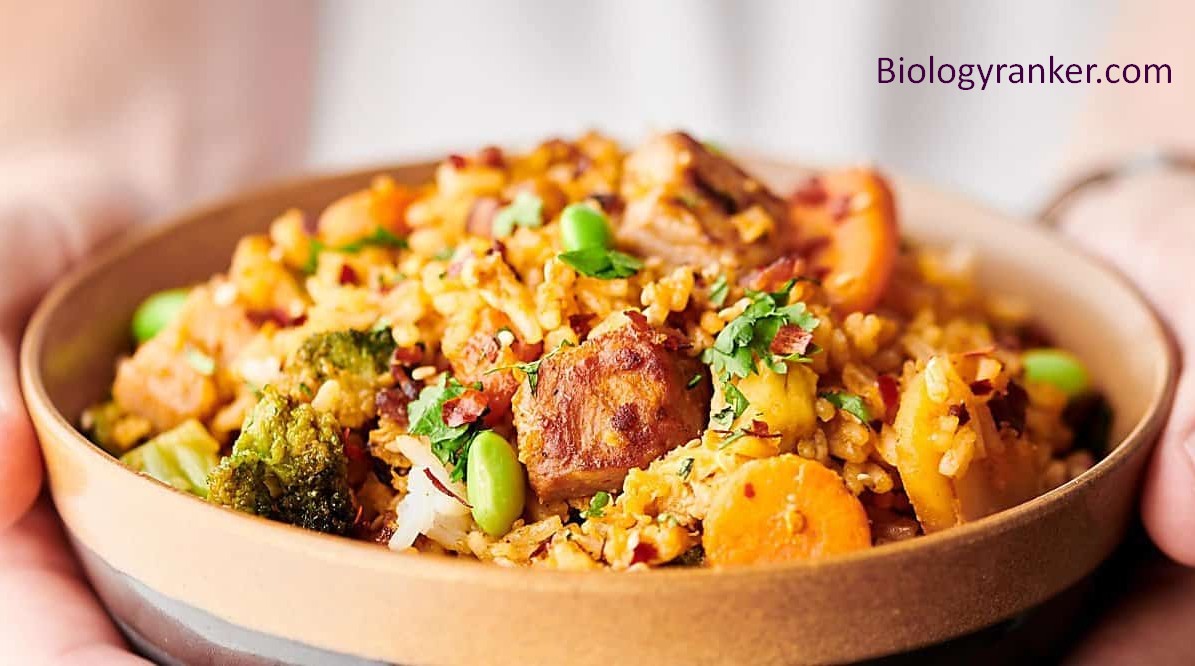
Pork fried rice isn’t just a side dish. It’s the dish Chinese restaurants built empires on, the thing college students survive on, and the smartest way to turn yesterday’s rice into today’s dinner. Done right, it’s smoky from “wok hei”, savory from soy, tender from juicy pork, and loaded with texture from eggs, peas, and scallions.
This isn’t a 5-ingredient afterthought. This is the full story: the technique, the history, the variations, and the recipe that actually works in a home kitchen. Let’s get into it.
Read more: Raspberry Lemon Snickerdoodles – Best Recipe Of Forever
The Anatomy of Perfect Pork Fried Rice
Restaurant fried rice tastes different from homemade because of 4 factors. Master these and you win.
1. The Rice: Dry Is King
Fresh, steaming rice = mushy fried rice. The starch and moisture make it clump and steam instead of fry.
What to use:
- Day-old jasmine rice: #1 choice. Grains stay separate, slight floral aroma.
- Medium-grain white rice: Works if jasmine isn’t around.
- Brown rice: Nutty, chewier, takes flavor well. Add 1-2 min cook time.
- Emergency fix: Spread fresh rice on a sheet pan, fridge 30 min uncovered. Or freezer for 15 min.
Pro ratio: 3 cups cooked rice = 1 cup uncooked. For 4 servings, you want 3-4 cups cooked.
2. The Pork: Flavor + Fat
Fried rice was born from scraps. That’s why pork works so well.
Best cuts ranked:
- Chinese BBQ pork (Char Siu) Char Siu: Sweet, smoky, red edges. If you can get it, use it.
- Pork shoulder/butt: Marbled, flavorful. Dice small, 1/4 inch.
- Pork tenderloin: Lean, tender. Don’t overcook it.
- Leftover pork chops or roast: The original way. Chop it up.
- Ground pork: Fastest. Browns nicely and distributes flavor.
Budget tip: Spam works. So does Chinese sausage Lap Cheong. Fried rice doesn’t judge.
3. The “Wok Hei” Problem at Home
“Wok hei” = breath of the wok. That smoky, seared flavor from 700°F+ restaurant burners. Your stove hits 300-400°F.
How we fake it:
- Blazing hot pan: Cast iron or carbon steel > nonstick. Preheat 3-4 min.
- Small batches: Crowding = steaming. Cook 2 servings max at once.
- Toast the rice: Let it sit untouched 30-45 sec before stirring. You want light browning.
- Soy sauce on the pan: Drizzle around the edge, not on the rice. It hits hot metal and vaporizes = smoky aroma.
4. The Seasoning: More Than Just Soy
Soy alone = flat and salty. The balance:
|
Ingredient |
Amount for 4 servings |
Why it matters |
|---|---|---|
|
Light soy sauce |
2-3 tbsp |
Salt + umami, main seasoning |
|
Dark soy sauce |
1 tsp |
Color + subtle molasses depth |
|
Oyster sauce |
1 tbsp |
Sweet-savory richness, body |
|
Sesame oil |
1 tsp |
Nutty aroma. Add at end only |
|
White pepper |
1/2 tsp |
Floral heat. Black pepper works but different vibe |
|
MSG |
1/4 tsp optional |
Rounds it out. Restaurants use it |
The Master Recipe – Classic Pork Fried Rice
Serves 4 | Time: 20 minutes | Difficulty: Easy
Ingredients
For the pork & marinade:
- 8 oz pork shoulder or tenderloin, 1/4-inch dice
- 1 tsp light soy sauce
- 1 tsp Shaoxing wine or dry sherry
- 1/2 tsp cornstarch
- 1/4 tsp white pepper
- 1 tsp neutral oil
For the rice:
- 4 cups day-old jasmine rice, clumps broken up with fingers
- 3 large eggs, beaten with pinch of salt
- 1 cup frozen peas + carrots, no need to thaw
- 3 scallions, whites + greens separated, thin sliced
- 2 cloves garlic, minced
- 1 tsp grated fresh ginger
For the sauce:
- 2.5 tbsp light soy sauce
- 1 tsp dark soy sauce
- 1 tbsp oyster sauce
- 1/2 tsp sugar
- 1/4 tsp white pepper
For cooking & finishing:
- 3-4 tbsp neutral oil (peanut, canola, avocado)
- 1 tsp toasted sesame oil
- Optional: MSG 1/4 tsp, chili oil, extra scallions
Step-by-Step Method
Step 1: Prep everything – “mise en place” or suffer
Fried rice moves fast. 6 minutes of cooking, 0 minutes to chop. Have rice clumps broken up, sauce mixed, pork marinated 10 min, veggies ready. Line it all up next to the stove.
Step 2: Marinate the pork
Toss diced pork with soy sauce, Shaoxing, cornstarch, white pepper, 1 tsp oil. Cornstarch = velveting. Keeps pork juicy in high heat. Let sit while you prep other stuff.
Step 3: Scramble eggs first, remove
Wok or large skillet on high heat 30 sec. Add 1 tbsp oil. Pour in eggs. Let set 10 sec, then push gently into soft curds. Undercook slightly – they’ll finish later. Remove to a bowl.
Step 4: Sear the pork
Same pan, still ripping hot. 1 tbsp oil. Add pork in one layer. Don’t touch for 45 sec. Get some browning. Stir-fry 1-2 min until 80% done. Remove to bowl with eggs.
Step 5: Aromatics
1 tbsp oil. Add scallion whites, garlic, ginger. Stir 15 seconds until fragrant. Don’t burn the garlic or it’s bitter forever.
Step 6: The rice fry
Add 1 more tbsp oil if pan looks dry. Dump in all rice. Press into pan with spatula. LEAVE IT 45 seconds. You’ll hear crackling. That’s the sear. Flip/toss, then press again 30 sec. Break up clumps. You want some grains lightly toasted.
Step 7: Sauce on the “ring of fire”
Push rice to middle. Drizzle sauce mixture around the edge of the hot pan, not directly on rice. It’ll sizzle, reduce, and smoke. After 10 sec, toss everything to coat. The rice should be tan, not dark brown.
Step 8: Back together
Add peas/carrots, pork, and egg back in. Toss 1-2 min until peas are hot and egg is broken into bite-size pieces. Pork should be just cooked.
Step 9: Finish
Kill heat. Drizzle sesame oil and add scallion greens. Toss once. Taste. Need more salt? Add soy. More depth? Pinch of MSG. Serve immediately.
The Science of Fried Rice – Why This Works
Why day-old rice? Starch retrogradation
Cooked rice has gelatinized starch. When it cools 12+ hours, starch molecules realign and recrystallize. This process, retrogradation, dries the surface and firms up grains. Result: rice that fries instead of mushing.
Why high heat? The Maillard reaction
Above 300°F, amino acids + sugars in pork and rice brown. That’s Maillard. It creates hundreds of new flavor compounds – nutty, roasted, meaty. Low heat = gray, wet rice. No flavor.
Why cook eggs separately?
If you dump raw egg into rice, it coats grains and makes them soggy. Scrambling first gives you distinct curds and keeps rice grains separate.
Why sesame oil at the end?
Sesame oil has volatile compounds that burn above 350°F. Adding it off heat preserves the aroma. Cook with it and you lose the point.
8 Common Mistakes and How to Fix Them
1. Mushy rice
Cause: Fresh/wet rice, overcrowded pan. Fix: Use day-old rice, cook in 2 batches.
2. Bland flavor
Cause: Only used soy sauce. Fix: Add oyster sauce, white pepper, sesame oil, pinch sugar + MSG.
3. Pale color, no “restaurant look”
Cause: No dark soy. Fix: 1 tsp dark soy = instant takeout color.
4. Pork is dry/chewy
Cause: Overcooked lean cuts, no marinade. Fix: Velvet with cornstarch, use shoulder, pull at 80% done.
5. Greasy
Cause: Too much oil, low heat. Fix: High heat needs less oil. 3-4 tbsp total for 4 servings is plenty.
6. Sticking to pan
Cause: Pan not hot enough before adding oil/rice. Fix: Heat pan 3 min, then oil, then it should be shimmering.
7. No “wok hei” taste
Cause: Home stove. Fix: Sauce-around-the-pan trick, use cast iron, don’t skip the toasting step.
8. Everything cooks unevenly
Cause: Didn’t prep first. Fix: Fried rice is 90% prep, 10% cooking. Mise en place is law.
Read also: 15 Health Benefits of Soursop Leaves You Need to Know
Variations – Make It Your Own
1. Yangzhou Fried Rice
The “deluxe” version. Add Chinese BBQ pork, shrimp, scallops, ham. Egg is often separated – yolk mixed with rice before frying for golden color.
2. Thai Pork Fried Rice – Khao Pad Moo Khao Pad
Fish sauce instead of soy, add lime juice, prik nam pla (chili-fish sauce), cilantro. Use jasmine rice. Top with fried egg.
3. Kimchi Pork Fried Rice
Swap peas for 1 cup chopped kimchi. Add 1 tbsp gochujang to sauce. Top with fried egg and sesame seeds. Funky, spicy, incredible.
4. Pineapple Pork Fried Rice
Add 1 cup fresh pineapple chunks + cashews in final minute. Serve in a pineapple boat if you’re feeling dramatic.
5. Low-Carb Cauliflower Version
Sub 4 cups riced cauliflower. Skip the day-old rule. Cook 2-3 min less. Add extra oyster sauce – cauliflower needs flavor help.
6. Breakfast Fried Rice
Use bacon instead of pork. Add 1 tbsp maple syrup to sauce. Top with runny fried egg. Coffee on the side.
A Brief History of Fried Rice
Fried rice was born around 600 AD during the Sui Dynasty in China. It was peasant food – a way to avoid wasting rice and use up small bits of meat and veg. The dish spread through trade and migration.
Why pork? Southern China, especially Guangdong, raised pigs. Pork was accessible, fatty, and flavorful. When Chinese immigrants opened restaurants in the US in the 1800s, pork fried rice became the default “house special” because it was cheap, fast, and used leftovers.
Today, every culture has a version: Nasi Goreng in Indonesia, Bokkeumbap in Korea, Arroz Chaufa in Peru. Same concept, local ingredients.
Meal Prep, Storage, and Reheating
Make ahead: Fried rice keeps 4 days in the fridge. Flavors actually improve day 1 → day 2.
Freezing: Spread cooled rice on sheet pan, freeze 1 hour, then bag. Lasts 3 months. No big ice chunks.
Reheating:
- Best: Skillet on med-high, 1 tsp oil, 3-4 min. Gets crispy again.
- Microwave: Sprinkle 1 tsp water over rice, cover, 90 sec. Steams it back to life.
- Don’t: Eat it cold from fridge after 4 days. Rice can harbor Bacillus cereus. Reheat piping hot.
Scaling: Recipe doubles fine, but cook in 2 batches or you’ll steam the rice.
What to Serve with Pork Fried Rice
Fried rice is a meal, but if you’re doing a spread:
- Egg Drop Soup: Light starter, 10 min.
- Chinese Garlic Green Beans: Crunch contrast.
- Potstickers: Because carbs + carbs = happiness.
- Hot Chili Oil: For the heat seekers.
- Cold Tsingtao Beer: The classic pairing.
Nutrition Breakdown (Per Serving)
Approximate for master recipe, serves 4:
- Calories: 520
- Protein: 22g
- Carbs: 58g
- Fat: 22g
- Fiber: 3g
- Sodium: 980mg
To lighten it up: Use pork tenderloin, 1 tbsp less oil, add 1 cup extra veggies like bell pepper or cabbage, use brown rice.
FAQ – You Asked, I’m Answering
Q: Can I use fresh rice?
A: Only if you must. Spread on sheet pan, fridge 30 min uncovered. It’s 80% as good.
Q: No wok. Cast iron vs nonstick?
A: Cast iron or carbon steel wins. Nonstick can’t get hot enough and you can’t use metal spatula to scrape.
Q: My kid hates peas. Sub?
A: Corn, edamame, diced bell pepper, or just leave it out. Fried rice is flexible.
Q: Is MSG bad?
A: FDA says MSG is “generally recognized as safe.” It’s glutamate, found in tomatoes and parmesan. If you don’t like it, skip it. Flavor will be 5% less round.
Q: Can I make it vegetarian?
A: Sub pork with tofu, mushrooms, or plant-based crumbles. Use vegetarian oyster sauce or mushroom soy.
Final Word: Fried Rice Is Technique, Not Just Recipe
You can buy $2 takeout fried rice. But once you nail this at home, you’ll stop. Because you control the salt, the pork-to-rice ratio, the amount of scallion. You get it piping hot, not lukewarm in a container.
The real secret? Fried rice is a ratio and a method. 3-4 cups rice, 8 oz protein, 3 eggs, 1 cup veg, 4 tbsp sauce. Hot pan, move fast, don’t crowd. Everything else is jazz.