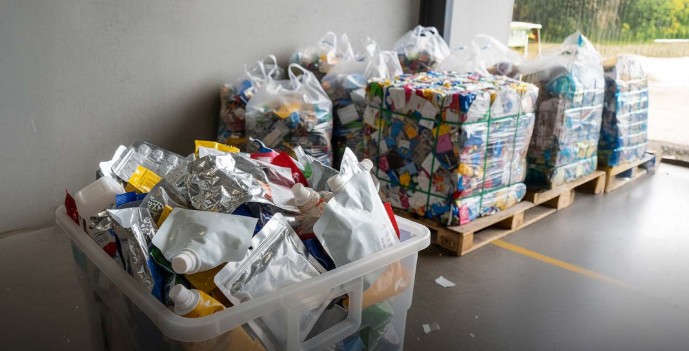
Today, there is an increased emphasis on performance and shelf life in the packaging industry. To respond to these requirements, many manufacturers structure packaging in multiple layers and use different materials (polyethylene (PE), polypropylene (PP), polyester (PET), paper, and occasionally, a thin sheet of aluminium). This design, often called multilayer plastic, helps brands keep their products fresh, prevent water or oxygen entry, increase durability, and facilitate easy transport.
Consumers are exposed to these materials every day in applications such as snack packets, bread bags, pouches for instant food items and pharmaceuticals, frozen food packaging, and personal care tubes. The laminated structure exhibits the advantages of high barrier performance for a relatively low cost and is therefore widely used by industries. However, the same complexity that makes it perform so well also poses major challenges to handling waste following its use.
This post discusses the major innovations, challenges, and future prospects for the multilayer plastic.
The Recycling Challenge
Due to its multilayer-material lamination, multilayer plastic waste poses the greatest challenge. Each of these layers has been bonded together to the extent that it is not possible to separate them by conventional recycling methods. When plastic from a single category of polymer is recycled, the traditional method is to rely on pretreating and compounding processes. However, when equipment used does not have the means of agitating more than one type of material during recycling, such as PE (polyethylene), PET (petroleum), aluminium and paper that are laminated together, these systems are known to be prone to substance breakage.
This results in:
- Very low recovery rate.
- The problem is the loss of constant material quality in reuse.
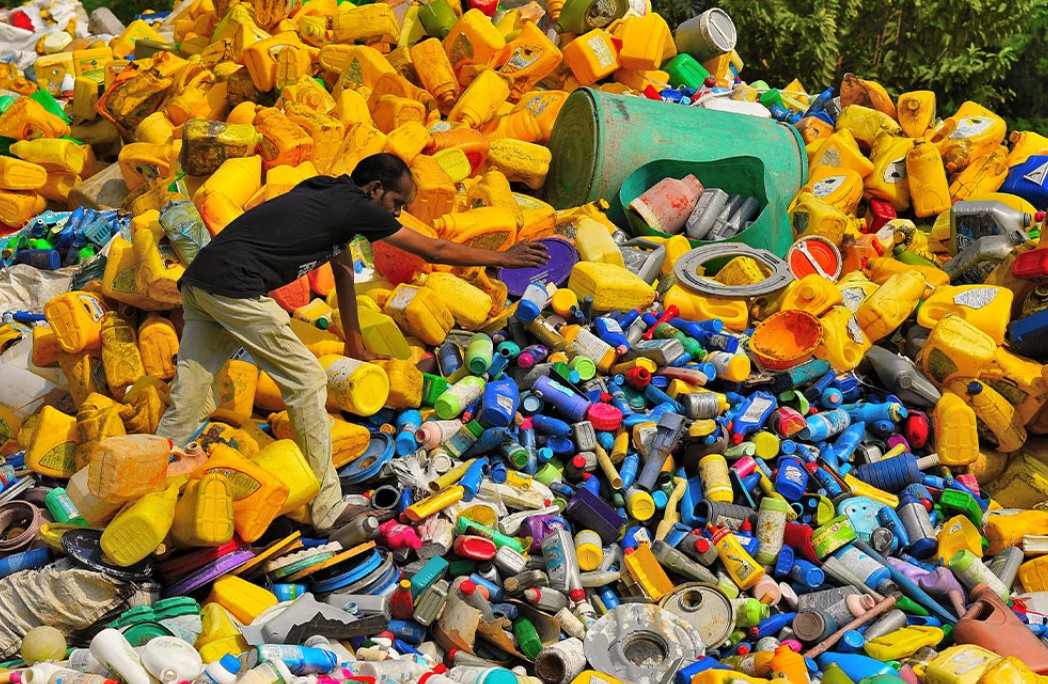
- Much of this waste goes to landfill, informal dumps, or low-value products.
With India consuming more and more packaged goods every day, this problem has only increased.
Mechanical Recycling Limitations
Mechanical recycling is based on melting, cutting up, and re-forming plastics. However, there are several problems in applying to multilayer plastic:
1. Contamination and Mixed Waste Streams
Informal networks continue to drive solid waste collection in India. Mixed waste is frequently contaminated with food, earth, and non-compatible plastics, rendering sorting difficult and costly.
2. Quality Degradation After Reprocessing
When multilayer materials are processed mechanically, the degradation of the polymer blend takes place. Thus, the process generates recycled plastics of inferior quality compared to virgin materials.
Under these limitations, it is obvious that mechanical recycling is not capable of solving the problem of multilayer waste at a large scale.
Advances in Recycling of Multilayer Plastic
In order to overcome these hurdles, scientists and recycling firms are seeking advanced recovery technologies that go beyond mechanical treatment:
1. Solvent-Based Delamination Technologies
This method is to dissolve certain solvents and strip off that plastic layer. The polymers can then be recovered to a much purer degree than mechanically recycled material, for reuse. This is particularly beneficial for PE–PET layered structures such as those commonly encountered in flexible packaging.
2. Chemical Recycling
Chemical recycling breaks plastic into its molecular components. Plastics are processed by pyrolysis into fuel or naphtha-type material and depolymerised to convert polymers back into monomers for repolymerisation. This option is promising because it can handle highly contaminated or mixed waste streams.
3. Enzymatic Recycling Research
Biotech labs are looking into the potential of lab-designed enzymes for breaking polymers apart. Although in its infancy, these enzymatic recycling processes present promise for energy-efficient, targeted material recovery in the long term.
4. High-Temperature Thermochemical Conversion
Such a process treats multilayer plastic waste to exposure to temperatures of hot air and or superheated steam under elevated pressure and so on in order to convert them into synthesis gas or oil. While energy-consuming, it allows volume reduction and the recovery of usable chemical products.
These innovations are part of a trend towards material recycling versus waste recycling.
Closed-Loop & Circular Economy Approaches
With recycling technology advancing, companies and research institutes are working on getting more recycled polymers back into the production process:
- The recovered polymers are worked up into granules or resins for moulding applications.
- The automotive industry is making extensive use of recycled plastics for interior parts, underbody shields, and non-appearance critical structural parts.
- Non-food items, including buckets, benches, battery casings, and storage containers, are being manufactured from recycled stock.
This method supports circular economy principles — designing materials so they stay in use as much as possible and with minimal waste leakage.
Real-world Examples of Multilayer Plastic Recycling
Recycling companies, such as Banyan Nation, have begun investing in technology-driven sorting, washing, and reprocessing units. They are at the top of adopting recycling methods. And their reprocessing models provide important guidance to Indian companies that are eager to scale. The fundamental insight is that technology is best deployed together with organised waste collection, partnerships, and end-market demand.
Policy and Extended Producer Responsibility (EPR)
Under India’s EPR system, brands are liable to pick up and recycle the plastic waste generated by their packaging. This policy push is influencing:
- Packaging design choices (favouring material downcycling).
- Brand collaborations with waste handling companies.
- Traceability systems for tracking the movement of waste through the recycling process.
As EPR builds momentum, companies placing investments in recycling-ready packaging and relationship-based recycling early will be best prepared to satisfy long-term compliance and brand value.
Future Outlook
Whether multilayer plastic recycling has a future in India is likely to be demonstrated:
- The transition to mono-material packaging for easier recycling.
- A combination of technology and resources between the industry and recyclers.
- Increasing requirements for recycled content in line with ESG reporting and sustainability commitments.
Final Words
Recycling multilayer plastic packaging is difficult but feasible with appropriate technology combined with an enabling policy environment and collaboration from a large number of companies. There is reason to believe that India can lead, especially in the scale-up of solvent recovery, chemical recycling, and circular economy manufacturing.
Companies like Banyan Nation are already proving what’s possible. Through technology-led recovery processes, data-driven traceability, and holistic brand engagement, Banyan Nation is working to build an ecosystem in which responsibly recycled material can return to the supply chain with credence. Their leadership shows that the future of circular packaging in India is not an aspiration but a reality.