
Understanding Your Power Needs
Preparing for a power outage starts with knowing which household appliances and systems you truly need to keep running—think refrigeration, heating or cooling, lighting, and essential medical devices. Each of these appliances has specific energy requirements for both starting and running, which has a direct impact on the size of the generator you’ll require. For expert generator installation customized to your needs, consult with trusted professionals like Columbia, SC whole home generator installation by licensed electricians.
It’s important to remember that even smaller homes can have significant energy loads depending on the appliances in use. Looking at the actual wattage ensures you choose a generator that prevents overloads, rather than one that’s based only on your home’s square footage. Inventorying essential devices helps you prioritize safety, comfort, and convenience during unexpected outages.
Calculating Total Wattage
Choosing a generator begins with accurately calculating the total power your essential appliances consume. Here are the steps to simplify the process:
- List Essential Appliances: List devices and systems you deem indispensable during a blackout. This typically includes refrigerators, sump pumps, lighting, and select outlets for device charging.
- Determine Wattage: Examine product labels or user manuals for each appliance’s starting (surge) and running (continuous) wattages. Surge wattage accounts for the brief power boost required when many appliances are switched on.
- Calculate Power Requirement: Add up the running wattages of all your chosen essentials and then factor in the highest single surge wattage. This sum tells you the minimum power rating your generator must provide.
For example, a standard refrigerator may use 700 watts, while a modern air conditioning unit may need over 3,500 watts at startup. This total wattage will guide your generator purchase and ensure each device gets the power it needs.
Choosing Between Essential and Whole-Home Coverage
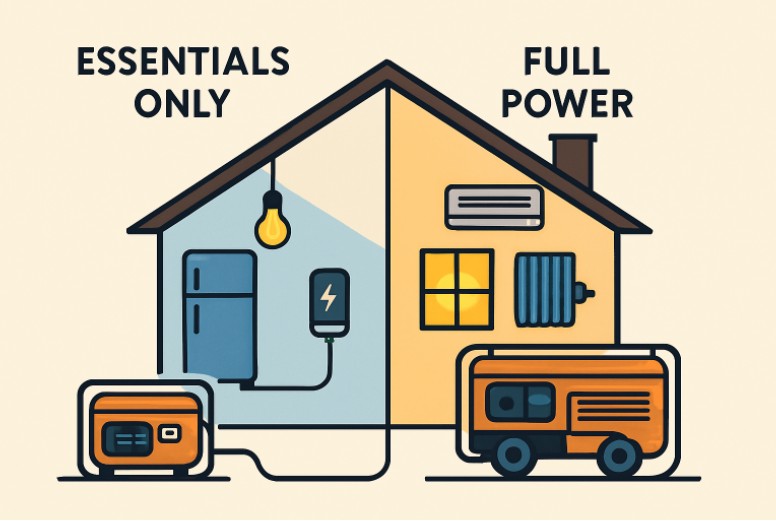
The next step is to decide whether you want a generator that powers only vital systems or one capable of providing electricity for your entire home. This decision has a substantial impact on both generator size and installation costs.
- Essential Coverage: A generator in the 3,500 to 5,000-watt range generally suffices for basic needs. It will easily run your refrigerator, a few lights, a sump pump, and device chargers. This option is ideal for smaller budgets or short, infrequent outages.
- Whole-Home Coverage: To keep your HVAC system, water heater, significant kitchen appliances, and potentially well pumps running, you’ll need a more robust generator—often 15,000 to 20,000 watts. This solution ensures maximum comfort during long-term outages and is well-suited for larger homes or those with critical medical equipment.
Ultimately, your lifestyle, local weather patterns, and frequency of outages should shape this decision. For additional guidance, resources like the Consumer Reports guide to generators can assist homeowners in making well-informed choices.
Considering Future Power Needs
When investing in a home generator, don’t just consider present-day appliances and usage. If you plan on adding major devices, finishing a basement, or installing a new HVAC system in the next few years, select a generator with excess capacity now. Sizing up prepares you for expansion and prevents the inconvenience of upgrading or replacing your generator sooner than necessary.
Fuel Types and Efficiency
Home generators are commonly powered by natural gas, liquid propane, or diesel. Each fuel type has pros and cons, typically concerning cost, availability, and convenience. Natural gas generators often rate highest for continuous power because of their connection to a utility supply, which means no refueling during extended outages. Meanwhile, propane offers long-term storage but requires regular tank filling. Diesel generators, though powerful, may emit more pollutants and are often reserved for off-grid systems or commercial settings.
Consider the efficiency of each fuel type in relation to your local fuel supply and typical outage duration. For more information on generator fuel choices, the U.S. Department of Energy provides reliable, up-to-date advice on efficient generator operation.
Installation and Maintenance
The performance and safety of your generator depend on a professional installation. Licensed electricians will ensure your transfer switch is correctly fitted, allowing seamless transitions when the utility supply fails. Proper placement is crucial: the generator must be outdoors, on level ground, and clear of doors, windows, or vents to prevent carbon monoxide infiltration.
Routine maintenance—such as oil changes, filter replacements, and weekly self-tests—extends your generator’s life and ensures it’s always ready for emergencies. Many generators feature automatic self-diagnosis, alerting you to necessary service or repairs before a breakdown occurs.
Safety Considerations
Safety should be your guiding principle when choosing, installing, and operating a home generator. Always locate the generator outside and at a safe distance from your home. Never run a generator indoors or in enclosed spaces due to the risk of carbon monoxide. Follow all manufacturer safety instructions, adhere to local building codes, and arrange regular checks by a qualified technician. Properly installed generators protect your family from both outages and avoidable hazards.
Final Thoughts
Sizing a home generator is more than a simple calculation—it requires careful consideration of your essential needs, long-term plans, and fuel preferences. Whether you aim to cover only the basics or keep every aspect of your home running, choosing the right generator protects your comfort, safety, and investment during power outages. Consult with professionals and only purchase from reputable dealers, ensuring you’re prepared for today’s emergencies and tomorrow’s changes.